

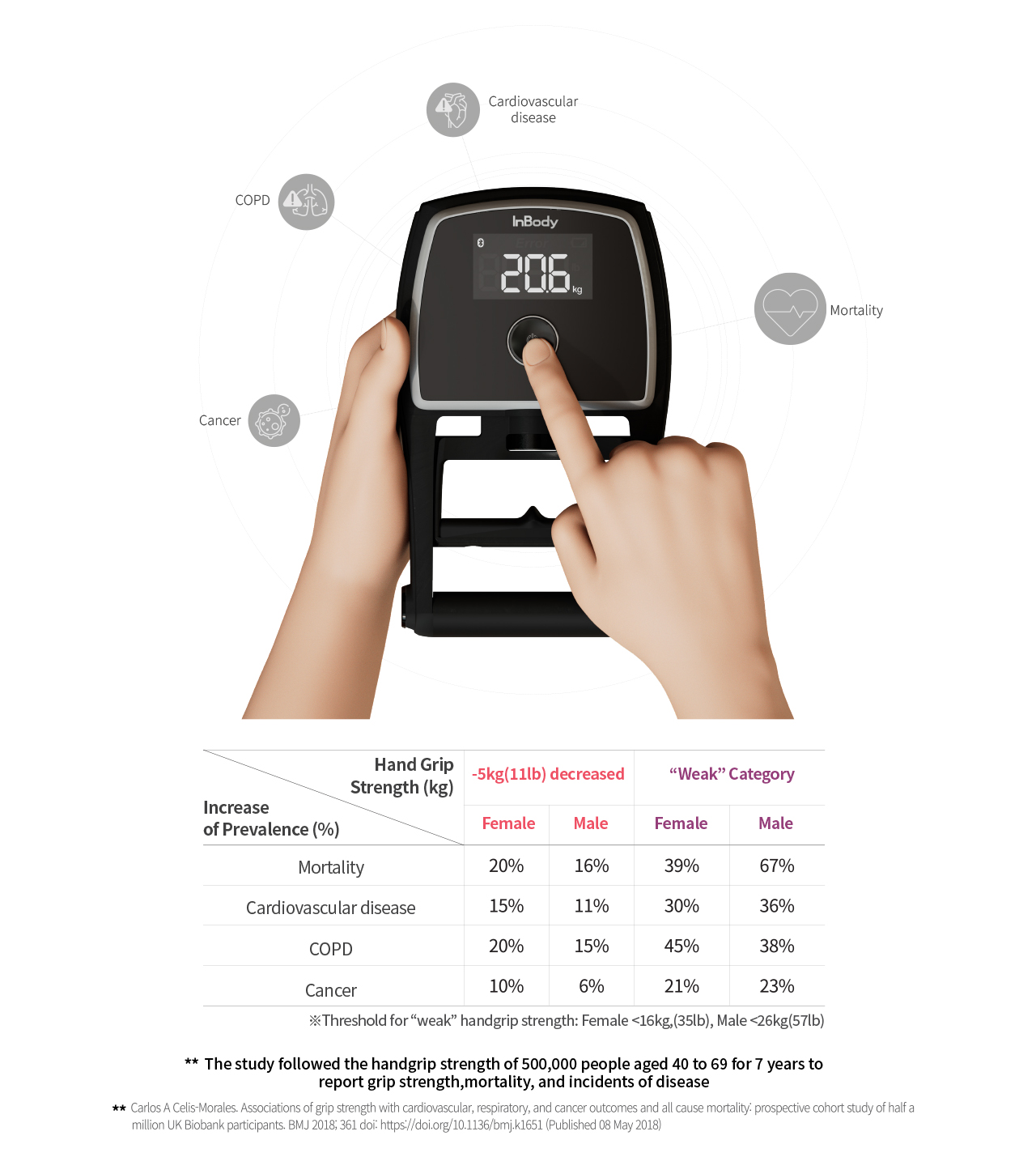

If you wanted a single number that hints at how well you’re aging, you probably wouldn’t guess it comes from squeezing something as hard as you can. But that’s exactly what decades of research keeps pointing to: grip strength, the force you can generate in your hand, is one of the most reliable predictors we have of long-term health and mortality risk.
The Research Is Surprisingly Consistent
The landmark study here is the PURE study, which followed more than 140,000 adults across 17 countries. It found that grip strength predicted mortality and cardiovascular events more strongly than systolic blood pressure — a measurement doctors have relied on for generations. A broader meta-analysis of 42 studies found that people with low grip strength had a 67% higher risk of dying from any cause compared to those with strong grips. Other research has found that every 5kg drop in grip strength is tied to a 16% higher risk of all-cause mortality and a 21% higher risk of cardiovascular death, even after accounting for other health factors.
These associations hold up across genders, income levels, and age groups, which is part of why researchers increasingly treat grip strength as a biomarker of aging itself, not just a measure of hand function.
Why a Handshake Reflects So Much
Grip strength isn’t really about your hands. It’s a proxy for the condition of your muscles, nerves, and cardiovascular system as a whole. Producing a strong grip requires healthy muscle mass, efficient neuromuscular coordination, and good blood flow — the same systems that decline together as we age. When grip weakens, it often signals that those underlying systems are weakening too, sometimes years before other symptoms show up.
There’s also a measurable timeline to this decline: research shows handgrip strength drops by roughly 4.5kg for every ten years after midlife. Some studies have even linked weaker grip to higher levels of systemic inflammation, suggesting the connection between grip and aging runs deeper than muscle alone.
The Good News: Grip Strength Is Trainable
Unlike your genes or your age, grip strength responds well to consistent effort — at any age. A few of the most effective ways to build it:
- Farmer’s carries: simply walk while holding a heavy weight in each hand. This works grip alongside your shoulders, core, and legs.
- Hand grippers: a simple, portable way to build squeezing strength over time.
- Plate pinches: hold a weight plate between your thumb and fingers to target a different but equally important grip pattern.
- Wrist curls: strengthen the forearm muscles that support grip.
- Dead hangs or barbell holds: simply hold onto a loaded bar for time to build endurance in the hands, wrists, and forearms.
Two to three sessions a week is enough for most people, since grip muscles recover more slowly than larger muscle groups. And plenty of grip strength comes from ordinary life: carrying groceries, gardening, opening jars, playing racquet sports. Staying physically engaged in daily tasks matters as much as any dedicated exercise.
The Takeaway
You don’t need a lab test to start paying attention to this. Next time you’re carrying bags, opening a stubborn jar, or gripping a set of dumbbells, notice how it feels. If it’s harder than it used to be, that’s worth addressing — not because a strong grip alone will add years to your life, but because it reflects the strength, coordination, and vitality of the systems that will.
Schedule an InBody Body Composition at Pause and receive a complimentary InBody Dynanometer Grip Strength test result with your body composition review. Book Now.



Comments +